
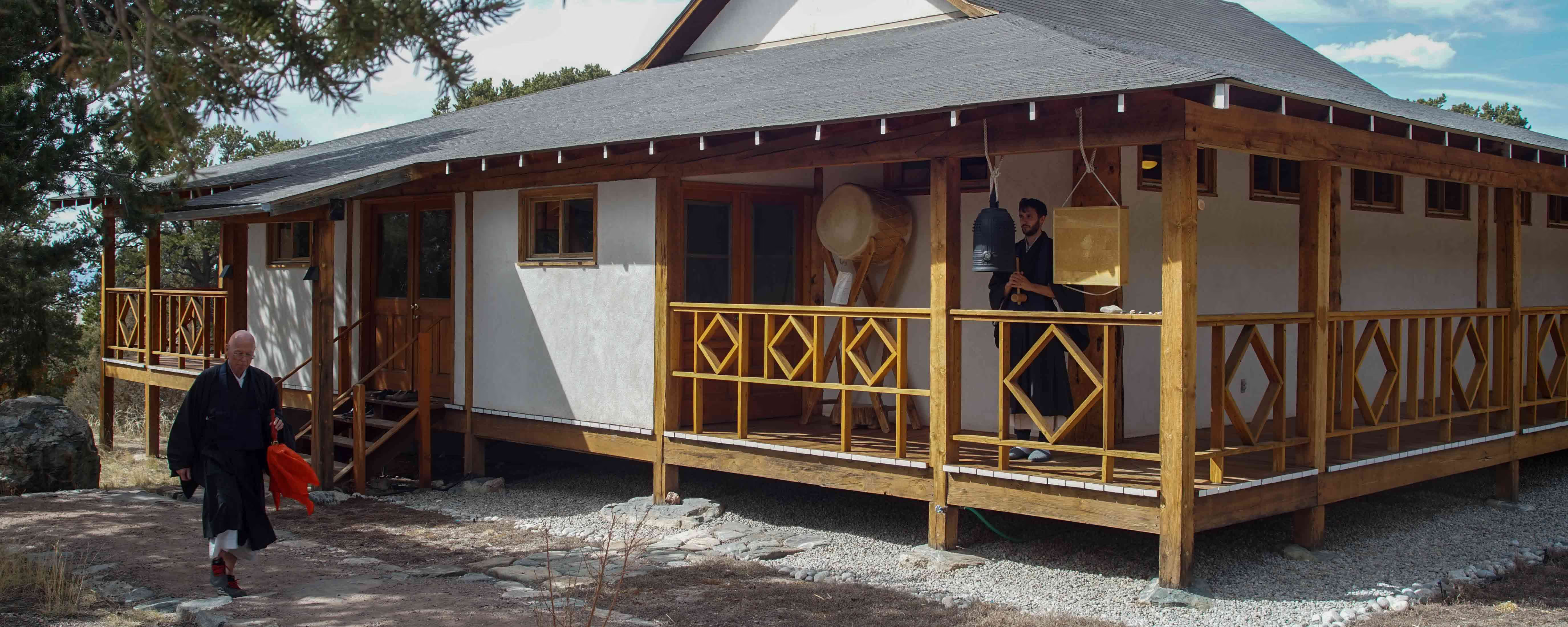
Residents live, practice, work, and study together throughout the year, following the daily rhythm of the monastery and sharing responsibility for the life of the Center. Zazen is at the heart of this rhythm, alongside communal meals, work practice, study, and periods of intensive practice.
Residency is a commitment of at least one year and is intended for those who want to explore monastic Zen practice as a way of life.
Life at Crestone follows a shared daily rhythm. Sitting practice, meals, work, study, and time for rest are not separate parts of monastic life, but different expressions of the same practice.

Two zazen sessions (= silent meditation) of 30–40 minutes each, with 10 minutes of Kinhin (=walking meditation) in between, followed by 25 minutes of Service (a sequence of bows and chants as a mutual practice in a shared space)

Oryoki means “Just Enough” and is a traditional monastic and ritualized meal using three bowls and just the utensils needed, following a specific procedure (we’d be happy to give you an introduction, if you’re interested in participating)
In Zen Buddhism, daily work and practice are closely intertwined. We limit conversations to functional talk—the kind necessary to carry out work in the garden, the kitchen, and the temple—in order to transfer our practice from zazen into everyday life.
Lunch together isn't just about eating; it's also a wonderful opportunity to get to know one another and have a conversation.
In Zen Buddhism, daily work and practice are closely intertwined. We limit conversations to functional talk—the kind necessary to carry out work in the garden, the kitchen, and the temple—in order to transfer our practice from zazen into everyday life.
We'll all get together again for dinner—this is another great opportunity to get to know others through conversation.
In the evening, we sit for one or two 30-minute zazen periods with a 5-minute interval in between.
The rhythm of the Center changes throughout the year. Residency means experiencing these different seasons of monastic life — from periods of intensive practice and study to the activity of our summer guest season.
Practice Period
From January through April, the Center enters its traditional 90-day Practice Period — a quieter time devoted to sustained practice and study, with the monastery closed to guests.
Practice & Guest Season
From May through October, monastic practice continues alongside our guest season. Residents help welcome retreat groups and care for the daily life of the Center, with regular zazenkai, teachings, and opportunities for practice exchange.
Study & Sesshin
November brings a period of Zen study, followed by our annual seven-day sesshin — an opportunity to deepen both study and intensive practice.
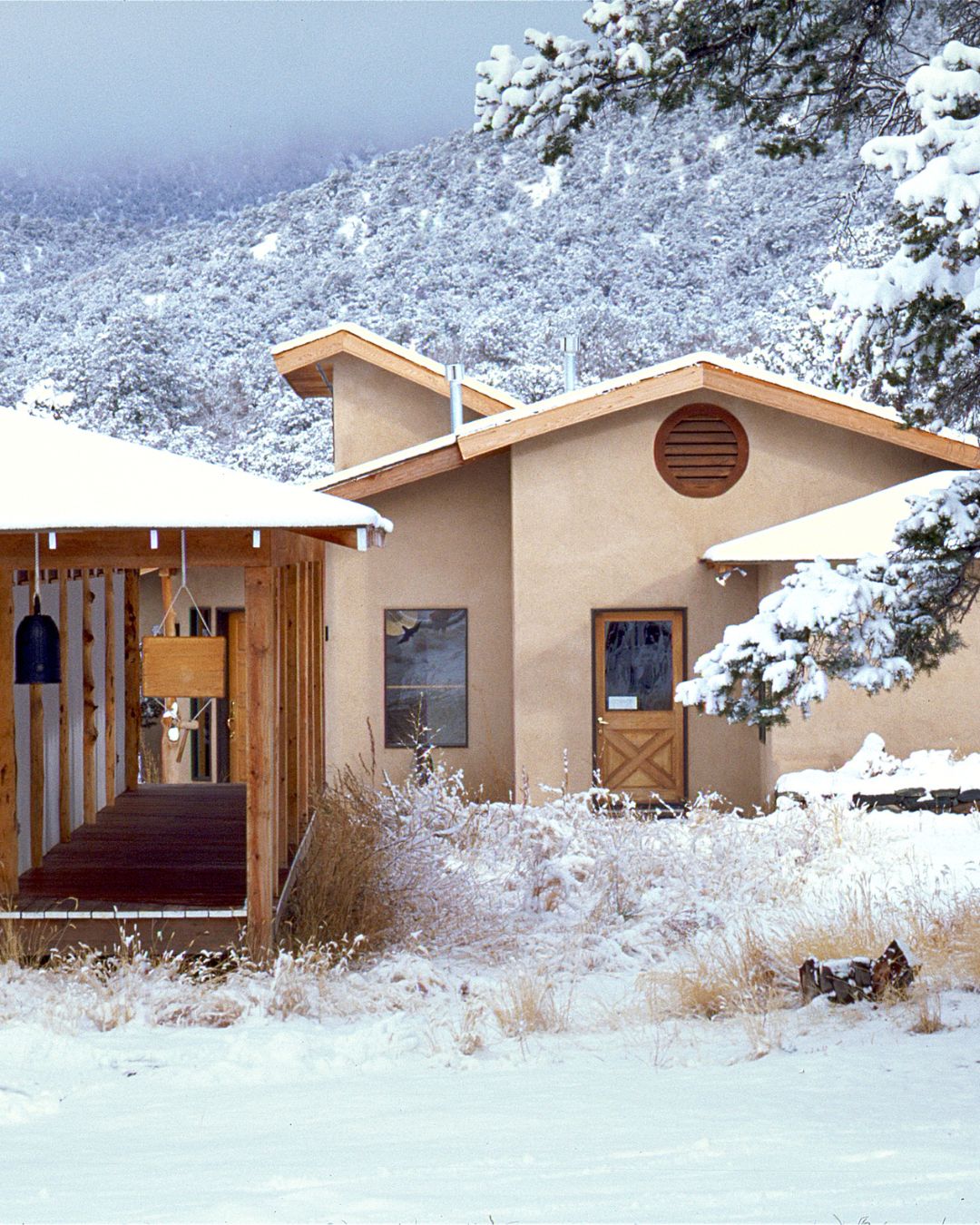
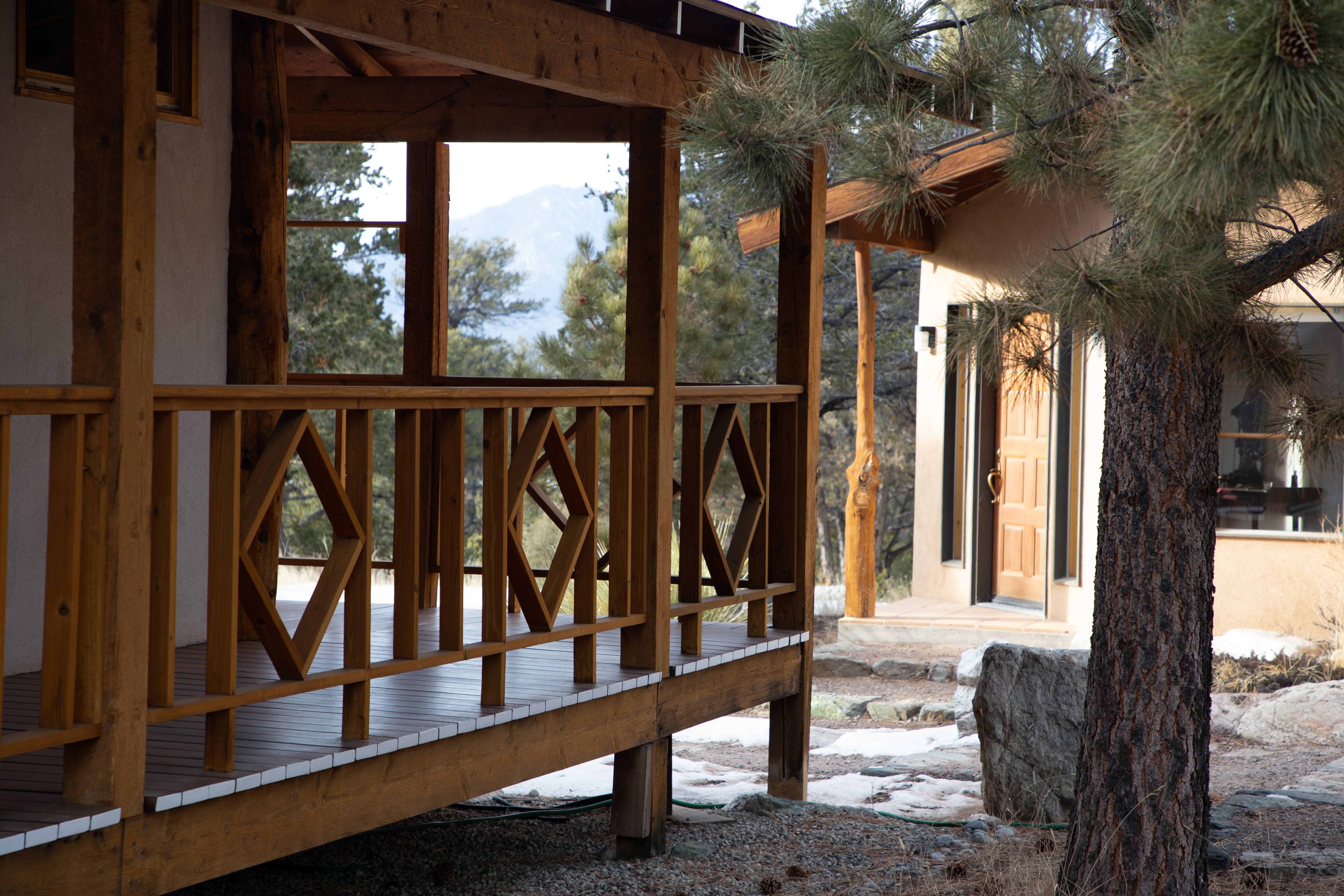
Residency means entering a shared life. We sit together, eat together, work together, and take responsibility for the place in which we practice.
Living in sangha brings practice into the ordinary moments of the day — into how we work, communicate, care for a place, and meet one another. The monastery becomes not only a place in which to practice, but part of the practice itself.
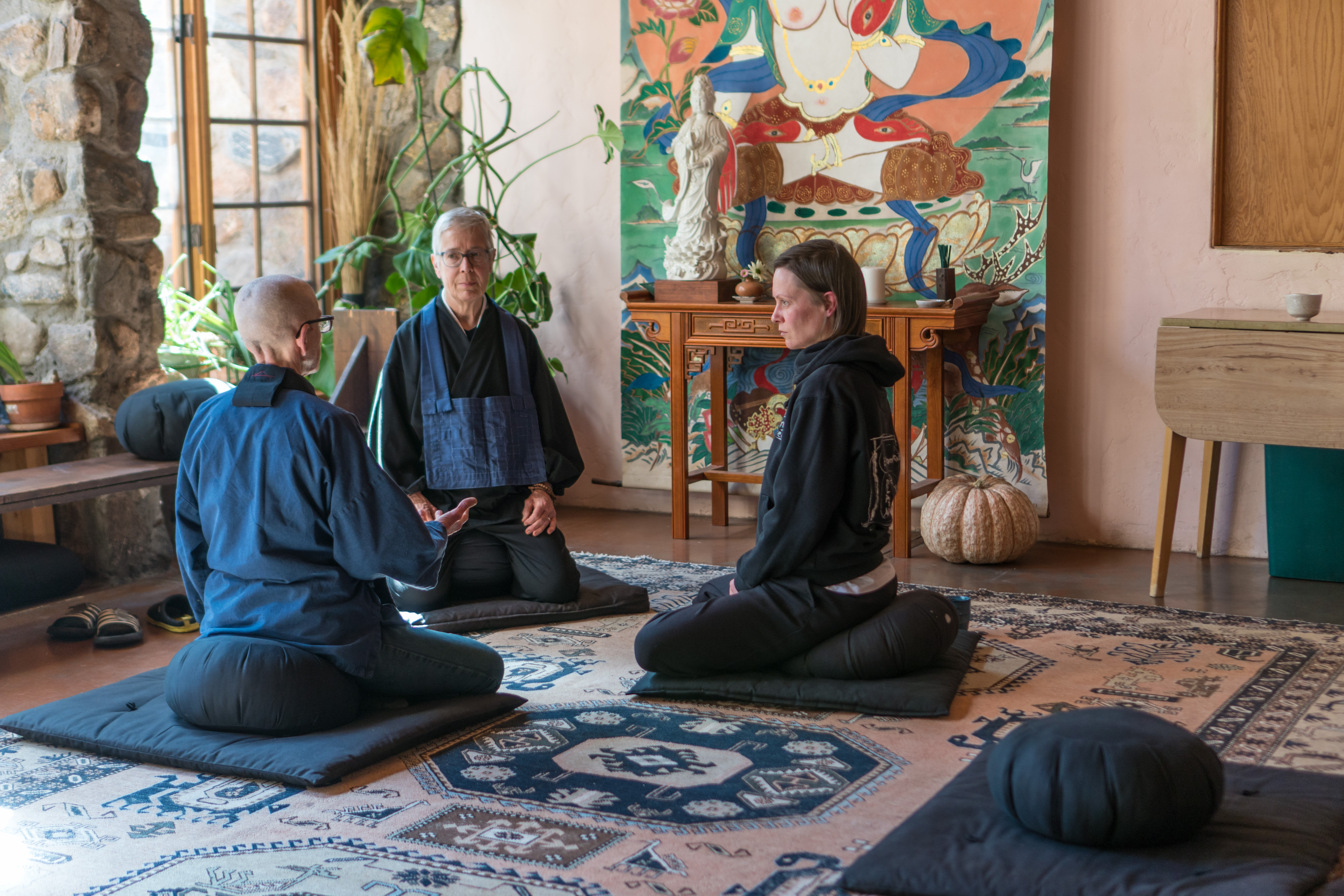
Residency offers sustained engagement with Zen practice over time. Alongside the daily schedule, residents take part in lectures, study, practice periods, zazenkai, sesshin, and opportunities for individual practice discussion.
Practice guidance is offered by the teachers and senior practitioners of Crestone Mountain Zen Center, with opportunities to study and discuss the teachings within the context of everyday monastic life.
Residency may be a good fit if you are looking for more than a retreat and feel drawn to making Zen practice part of the structure of your everyday life.
You don't need to arrive with years of monastic experience. More important is a genuine interest in practice, a willingness to participate fully in community life, and openness to the discipline and simplicity of a shared monastic rhythm.


If you are interested in our residency program, of course, we have to get to know each other first. It is a big decision! Therefore, there are several steps in the application process:
The minimum stay for residency is one year. If you are interested in a shorter stay, please inquire about student or volunteer programs.
You will be housed in a single room. During the summer guest season, it may be necessary for you to live in one of our resident tents for up to eight weeks.
You will receive room and board in exchange for your participation in sustaining the daily life at the Center. After having lived with us for at least six months, a small stipend can be considered.
Residency is a significant commitment, both for you and for the community. The application process gives us time to get to know one another and to explore whether living and practicing at Crestone feels like a good fit.